In Part 1 I wrote about the analytics maturity curve and the gap/chasm that makes it difficult for enterprises to move from traditional BI/descriptive analytics to more modern, value-driven analytics.
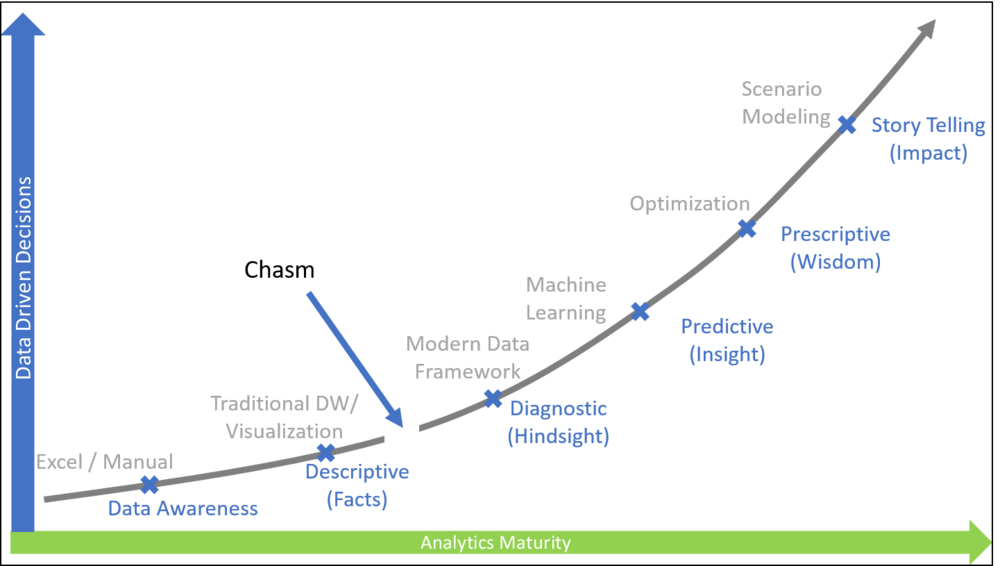
Following are the key reasons that make it difficult for organizations to move from the bottom of the maturity curve:
- Huge capex investments in existing BI tools and hardware, making it difficult to build a business case for new technology
- Huge cost of re-architecture and re-design to move to cloud
- No clear understanding of roadmap, causing data teams to focus on too many things at once
- Fear of missing out (FOMO) on AI and ML, which causes unprecedented chaos
- Lack of skills on cloud technologies and general fear of the unknown
Here are the key ingredients organizations should invest in to leap to a more mature analytics organization.
Low Investment, High Value Opportunities
More mature organizations might need sophisticated technology and frameworks with bigger investment, but it’s not necessary to start there. Organizations can start with small investment but high-impact projects and slowly build the foundation for the future.
One way is by enabling business-focused analytics using tools such as Power BI and Tableau. These tools provide the capability to use data from multiple sources and provide easy ways to manipulate data to enable rich visualizations for business users. The investment is minimal, but end users get used to more advanced tools and don’t have to wait months for IT teams to build 1–2 BI reports.
Invest in the Data Hub/Lake
While business users explore self-service and advanced BI tools, IT organizations should explore the possibility of using advanced storage media and the concept of a data lake to consolidate data from various source systems and move it to one place. This will be key to moving to the next level.
Understand Your Technical Debt
Cloud technologies come with a promise of a one-stop shop to solve all technology problems. However, it’s not true. All cloud vendors are good in some areas and need support from external technology in others. For example, Microsoft may have a better reporting solution (Power BI) but might lack in more mature big data clusters. Amazon might have better compute and management but might need stronger ETL and reporting capabilities.
The trick is to evaluate technologies that are necessary for the roadmap. Work with cloud providers to check if similar solutions are on the near-term roadmap. Even if you can afford the initial cost of supplementary technology, the increase in technical debt will make it difficult to manage long-term.
Structure Your Team
Given the technology shift and the speed and agility needed to compete in today’s digital world, it has become far more important to have a team that can deliver solutions faster and help achieve business outcomes. Read Redesigning Enterprise Analytics Teams to understand how an analytics team for the cloud generation can be structured.
Train and Learn
One of the important steps in starting the journey is to ensure that all stakeholders understand and acknowledge any challenges in the current solutions. The users and data team stakeholders need to understand the shift in the technology landscape and learn upcoming technologies on cloud platforms such as Azure, AWS, and GCP.
Leverage trainings and partners to ensure that internal teams are well versed with the technology and can make informed decisions.