In the previous blog on Framework for Data Governance, I introduced the three spheres of data governance. This blog focuses on the first sphere — the Organization Sphere — and explains in detail the factors and levers within it.
Organization refers to the people part of the enterprise, and the part I consider most important in the DG journey. This is the “Who” part of the framework. The success of any efforts, including data governance, is based on the readiness of the organization. These efforts are implemented at the grassroots level where the rubber meets the road, but the commitment from top leadership and sponsors directly impacts the success of the efforts.
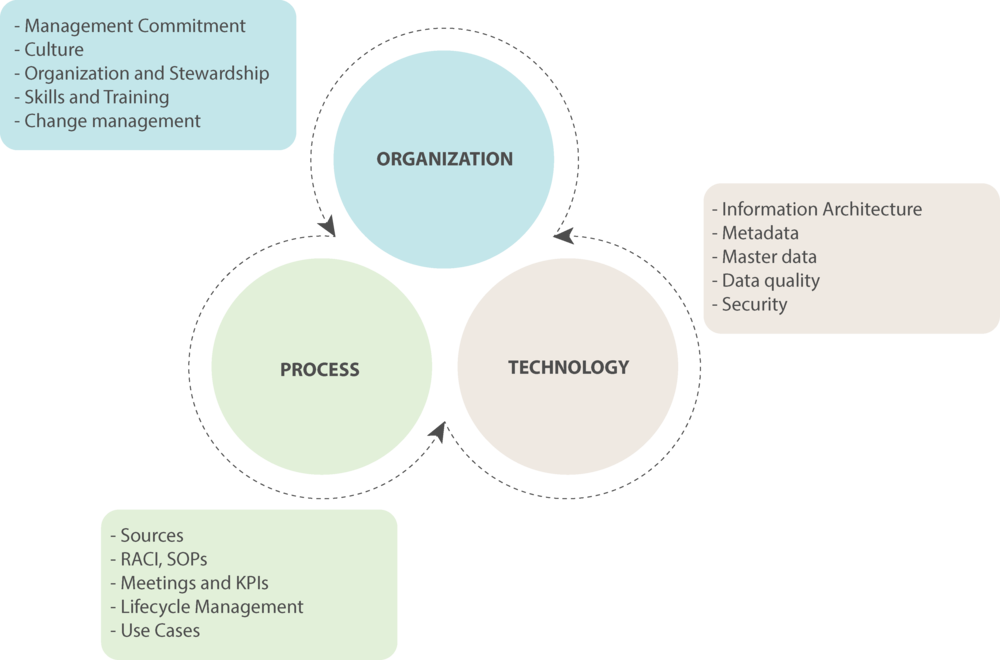
Management Commitment
Any successful initiative needs buy-in and commitment from stakeholders. In the case of Data Governance, almost all levels within the organization are stakeholders. Since there are multiple levels of roles involved at different responsibility levels, the commitment from top-down makes a huge difference in the success and failure of the DG initiative.
DG is often considered a journey and process rather than a project with an end date and clear physical deliverable. This can be a long process with no clear monthly/weekly deliverable — and this needs to be acknowledged by the leadership team. Once this is understood and management shows commitment, there is a good chance of success.
Culture
There are few components of the DG journey, such as collaboration, which play an important role in success. These factors are part of organizational culture. Governance is not a one-person job and needs a more collaborative environment. Even with commitment from management, the work of the actual DG organization needs to be collaborative. This collaboration cannot be achieved in a day or a week but is largely dependent on the overall culture of the organization.
Organization and Stewardship
There are very few DG programs where there are dedicated roles for the DG organization. Most of the time these roles have to be filled by existing data or business teams. Roles such as Data Stewards, domain stewards, and DG council members are filled by existing people in the organization. This organization structure, clearly defined roles and responsibilities, and the ability of the existing team to carry out these roles is a key part of DG success.
Skills and Training
Data Governance stewardship and other roles need certain skills which data organization staff members might not have. This calls for training and upskilling the DG team. Training should not be ignored and should be an ongoing process rather than a one-time event to continuously upgrade the skills of the DG organization members.
Apart from the skills and training needs of the DG organization, there is also a need to update the skills of the rest of the organization. DG adoption is largely dependent on people understanding the need and value of DG — and that can be achieved through active training.
Change Management
The importance of change management can never be overstated in any initiative that touches and impacts almost everyone and almost every process in the IT organization. Change management plays an important role in the successful implementation and long-term adoption of DG in the organization.
The above describes the key areas within the organization sphere and why and how they play into the bigger picture of Data Governance. The other two spheres — Process and Technology — are covered in separate blogs.